Strengthening Climate Resilience in Kathmandu Valley Through Ecosystem-Based Adaptation
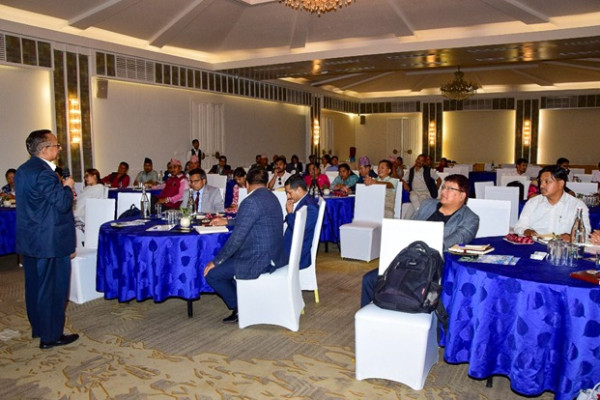
In collaboration with GEF, UNEP, and UN-Habitat, Kathmandu Valley Development Authority (KVDA) organized a one-day training on “Understanding Ecosystem-Based Adaptation for Climate-Resilient Development in the Kathmandu Valley” for elected representatives and political leaders of Tokha Municipality on 20 August 2025. This event was organized as part of the ongoing project, Urban Ecosystem-based Adaptation for Climate-resilient Development in the Kathmandu Valley, which aims to strengthen urban resilience to climate change in the Kathmandu Valley.
The main goal of this training event is to strengthen the understanding of elected representatives and political leaders on Ecosystem-based Adaptation (EbA) in the urban context of the Kathmandu Valley. It aims to raise awareness on the concept of EbA and the need of inclusive participation in integrating EbA into municipal planning and budgeting process.
The event was chaired by Ms. Januka Dhakal, Development Commissioner of KVDA, and honored by the presence of the Chief Guest, Honorable Minister for Health and Population, Mr. Pradeep Poudel. He was joined by several distinguished guests, including members of the Bagmati Provincial Assembly, representatives from the Ministry of Urban Development (MoUD), the Department of Urban Development and Building Construction (DUDBC), as well as the District Commissioners of Kathmandu, Lalitpur, and Bhaktapur, among others. Ms. Januka Dhakal welcomed to all participants and highlighted that their presence at the training reflects a strong commitment to building a sustainable and resilient future for the Kathmandu Valley. In his address, the Chief Guest, Mr. Pradeep Poudel, underscored the dual challenges confronting the valley: the pressures of rapid urbanization and the escalating impacts of climate change. He noted that issues such as flash floods, water scarcity, and heat stress pose significant threats to both local communities, health and the valley’s cultural heritage. Mr. Poudel emphasized that EbA presents an effective, nature-based solution to these challenges—leveraging natural ecosystems like rivers, green spaces, and wetlands to enhance resilience, reduce risks, and foster a healthier, more livable urban environment for all.