Shaping Inclusive Cities: Consultation on Training Manual for Gender-Responsive and Climate-Resilient Urban Planning Guidelines
Lalitpur | 04 May 2026
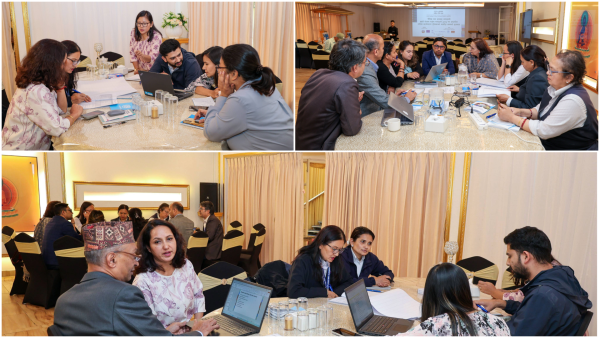
As part of ongoing efforts to advance inclusive and resilient urban development, the Ministry of Urban Development (MoUD), in partnership with UN-Habitat, UNOPS, and Cities Alliance, organized a half-day working session to review the training manual on “Gender and Climate Responsive Municipal Urban Planning Guideline” in Lalitpur on 4 May 2026. The workshop brought together 21 representatives, including 11 women, from key institutions such as Kathmandu Valley Development Authority, National Association of Rural Municipalities in Nepal, Municipal Association of Nepal, Ministry of Federal Affairs and General Administration, municipalities, and development partners. The workshop aimed to refine a training manual designed to support local-level implementation of the Step-by-Step Gender and Climate-Responsive Municipal Urban Planning Guideline.

The event built on earlier discussions from the National Validation Workshop in Nagarkot, where stakeholders highlighted the importance of developing a practical and user-friendly manual to translate the national guideline into actionable tools for municipalities. In opening the session, the moderator underscored the importance of collective engagement to ensure the manual accurately reflects local realities and supports effective implementation at the municipal level.

In her welcome remarks, Habitat Programme Manager Pragya Pradhan emphasized that the central purpose of the consultation was to gather substantive, action-oriented feedback to finalize the training manual. She underlined that the process is inherently collaborative, noting that many participants have been directly involved in shaping the broader guidelines and framework. “This workshop has been intentionally designed as a focused, interactive space to enable in-depth discussion, critical reflection, and a strong sense of shared ownership over the final product,” she stated.

Technical experts presented the draft training manual, outlining its structure, content, and core components, including its objectives, target audience, and methodological approach. The manual proposes a structured two-day, non-residential training designed to prioritize hands-on, practice-oriented learning through case-based exercises, group work, and facilitated discussions. It is intended to address critical knowledge gaps in the framework, strengthen consistency in urban planning practices across municipalities, and provide clear, step-by-step guidance for facilitators to ensure effective and standardized delivery.

Participants engaged actively in group discussions and
contributed substantive, constructive recommendations to strengthen the
document. Key inputs focused on reinforcing the role of local governments,
explicitly positioning women, senior citizens, persons with disabilities, and
other marginalized groups as central stakeholders, and ensuring full alignment
with existing local governance frameworks and legal provisions. Participants
also stressed the importance of enhancing training delivery by integrating interactive
components, such as ice-breaker sessions, to improve engagement, participation,
and overall learning effectiveness.