Restoring Water and Restoring Hopes: Rehabilitation of Gare Khola to Ranikhet Irrigation Canal, Nalgad Municipality
Jajarkot | 25 February 2026
“The canal that once lay broken by
disaster is flowing again-bringing water, light, and hope back into our lives.”
In the hilly landscape of Ranikhet, Nalgad
Municipality - 5 in Jajarkot, farming is a major source of income. For 171
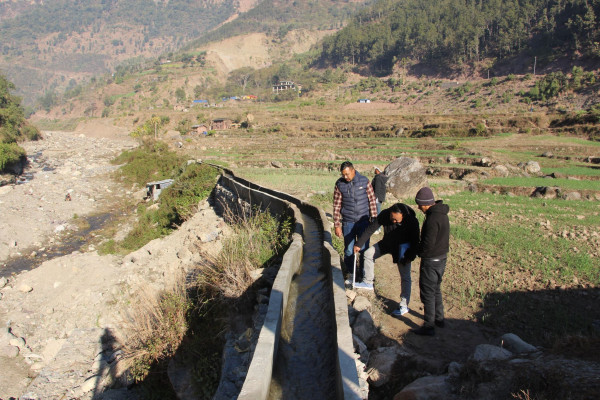
households, the Gade Khola-Ranikhet Irrigation canal is more than a channel for
water. It supports terraced fields, runs traditional water mill, and feeds an
11 kW mini hydropower system in the area out of reach of the national grid.
When water stops flowing, daily life becomes difficult, leading to lessened
crop yields, and declined food production - affecting the family income.
In November 2023, a powerful 6.4-magnitude
earthquake struck Karnali Province, hitting Jajarkot and West Rukum the
hardest. More than 150 lives were lost, and homes and community infrastructure
were badly damaged. Communities in this remote region were already facing
challenges of food insecurity, floods, landslides, and drought, and the
earthquake made these struggles even heavier.
Although the irrigation canal was not fully
damaged during the earthquake, heavy flash floods in 2024 damaged two major
sections. Retaining walls collapsed, and water supply to about 200 ropani (10
hectarre) of farmland was cut off. One water mill stopped working, and the
mini-hydropower system shut down, leaving many families without electricity.
“We tried to repair the canal using plastic sheets, old GI sheets, and wooden supports”, shared Bhim Bahadur Oli, a local farmer. “But these temporary solutions kept failing. Without the canal, there is no way to bring water to our fields. We cannot depend on rain alone.”

Under the project “Livelihoods Improvement and Disaster Resilience Enhancement in the Areas Affected by the Jajarkot Earthquake”, implemented with financial support from the Government of Japan, led by UNDP in collaboration with UN-Habitat andn local partner Chay-Ya Nepal, a series of field visits and community consutlations were carried out to assess the damage and needs. During these consultations, Mayor Dambar Bahadur Rawat, Deputy Mayor Debaka Lamichhane, and Ward Chairperson Om Raj Oli highlighted Ranikhet as among the most affected areas. They prioritized rehabilitation of the canal, as the community depends heavily on this shared infrastructure and that restoring it would quickly revive livelihoods and improve water security.
