Validating Key Policy Documents: Advancing Inclusive and Climate-Resilient Urban Development
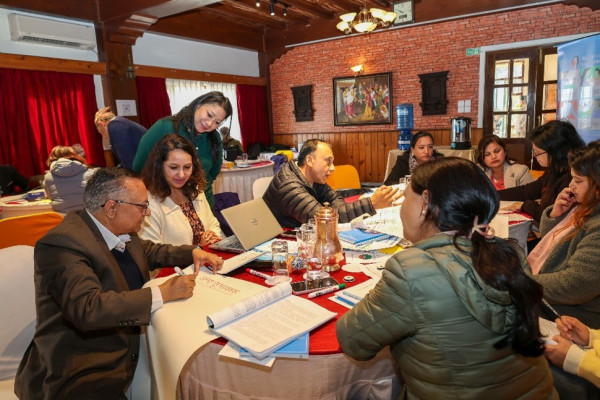
Kathmandu, 20 December 2025
A two-day Residential Validation Workshop, organized by UN-Habitat Nepal in collaboration with the Ministry of Urban Development (MoUD), was successfully concluded on 19–20 December 2025 in Nagarkot. The workshop validated two key draft documents: the National Gender-Responsive and Climate-Resilient Urban Development Framework and the Gender- and Climate-Responsive Municipal Urban Planning Guideline.

Chaired by Mr. Nabaraj Pyakurel, Joint Secretary of the Ministry of Urban Development (MoUD), the event convened 21 stakeholders, including senior officials from the National Planning Commission (NPC), the Ministry of Federal Affairs and General Administration (MoFAGA), local governments, and technical experts. Notably, women comprised more than half of the participants (12 in total), underscoring a strong commitment to gender-responsive engagement.

During the workshop, several key stakeholders shared valuable insights. Mr. Rajesh Babu Ghimire, Director at the National Planning Commission (NPC), reflected on current urbanization trends, noting that although a large proportion of the population continues to reside in rural areas, many now live in emerging urban settlements that require adequate services and infrastructure. He emphasized that cities should be developed as sustainable and inclusive spaces that improve quality of life rather than impose additional burdens.

Mr. Nabaraj Pyakurel, Joint Secretary of MoUD, noted that the guideline and framework come at a crucial time as Nepal plans new cities. He emphasized simplifying the documents, clustering activities for practical application, and including youth voices in stakeholder mapping. He also highlighted the need for clear action plans to support local governments, ensure SDG localization, and maintain alignment with national policies, while calling for ongoing review during implementation.

Participants provided actionable feedback through presentations and group discussions to enhance the clarity and usability of both documents. Recommendations focused on strengthening GEDSI integration, improving links to national financing mechanisms, enhancing risk management, and aligning more closely with the 16th Periodic Plan and SDG localization.

The workshop reinforced institutional ownership, with the MoUD and the NPC expressing strong commitment to finalizing the documents and supporting their effective implementation. Participants also emphasized the need for complementary tools, such as implementation manuals, to ensure practical application at both national and local levels. The workshop concluded with MoUD extending its appreciation to all participants and partners for their valuable contributions. The refined guideline and framework are expected to play a critical role in steering Nepal’s urban development toward more inclusive, equitable, and climate-resilient cities.
Photo: ©UN-Habitat/Hari Jang
Thapa