Strengthening Municipal Finance and Revenue Generation for Inclusive and Climate-Resilient Urban Development
Lalitpur | 04 May 2026
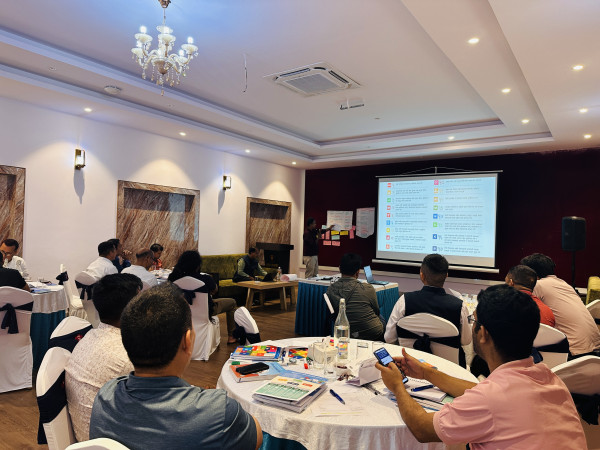
Training on Capacity Building Training on Municipal
Financial/Revenue Generation and Management was conducted on 26 and 27 May 2026
in Tilottama Municipality of Rupandehi district. Twenty-eight municipal
officials and elected representatives from four local governments-Hetauda sub
metropolitan city, Tansen, Sunwal and Tilottama municipalities- took part the
training under the Cities 4 Women (C4W): Inclusive and Climate Resilient
Urbanization in Nepal project.
The training brought together Deputy Mayors, Ward
Chairpersons, and officials from revenue collection, finance, planning,
infrastructure, and other municipal sections to strengthen local governments'
capacity in financial governance and sustainable resource mobilization. Of the
28 participants, seven were women.

Facilitated by municipal finance expert Dr. Gopi Krishna
Khanal, the training focused on key areas including municipal taxation, revenue
forecasting, strategic planning, climate financing, SDG localization, budget
coding, and revenue strengthening mechanisms. Through presentations, practical
exercises, and group discussions, participants explored ways to improve local
revenue generation while ensuring that municipal budgets remain responsive to
development priorities, gender equality, social inclusion, and climate
resilience.
A major component of the training involved analyzing municipal programmes and budgets against the Sustainable Development Goals (SDGs). Participants identified how investments in education, health, agriculture, infrastructure, women’s empowerment, tourism, and environmental management contribute to national and global development goals. The exercise encouraged municipalities to strengthen evidence-based planning and improve the alignment of local budgets with SDG targets.

Reflecting on the relevance of the training, Jagadishwar Devi Chaudhary, Deputy Mayor of Tilottama Municipality, highlighted the timely nature of the programme.
"This training was conducted at a very appropriate
time, as municipalities are currently engaged in the budget formulation
process. Since the government's policies and programmes for the fiscal year
form the major foundation of the budget, this training will be highly
beneficial for mayors and local government leaders in aligning budget
allocations with national priorities. Personally, I learned many important
aspects, especially the need to expand the tax base rather than merely
increasing tax rates for the people," she said.
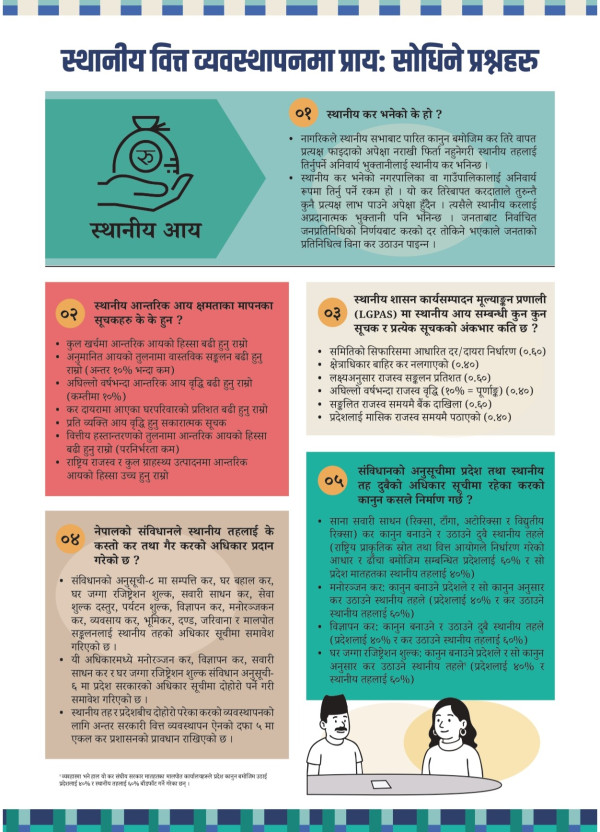
Participants also gained practical knowledge on municipal taxation systems, revenue forecasting, and strategies for strengthening own-source revenue. Discussions focused on broadening the local tax base, improving collection efficiency, reducing revenue leakages, and identifying innovative sources of municipal income. The sessions emphasized that sustainable local revenue generation is critical for improving service delivery and financing local development priorities.

Sharing his experience, Durga Bahadur Thapa, Cities 4 Women Focal Person of Tansen Municipality, noted that the training offered both technical learning and opportunities for peer exchange.
"This training was highly supportive in helping us understand Nepal's major taxation systems from a historical perspective. The tax increment formula was particularly valuable, as it provided us with a clear basis for implementing tax increments in our local government. We also had valuable opportunities to exchange ideas and experiences with participants from other local governments," he stated.

The training further enabled participants to develop
practical action plans for strengthening municipal revenue systems and
improving financial sustainability. Through group work and collaborative
discussions, participants identified concrete measures that could be
implemented within their municipalities to enhance revenue generation and
strengthen governance systems.
Representatives from Sunwal Municipality emphasized the practical value of the training in supporting ongoing planning and budgeting processes. Balkrishna Pangeni, Ward Chairperson of Sunwal Municipality, shared that the knowledge gained would directly support municipal decision-making and institutional strengthening.
"This training has been highly fruitful, particularly as local governments are preparing annual plans, policies, and budgets. The sessions provided practical knowledge on municipal finance, revenue generation, and strategic planning that will support our planning and decision-making processes. We will share the key learnings with our municipal team and develop concrete action plans to strengthen local revenue generation for the betterment of our municipality and the services we provide to our citizens," they remarked.

The training forms part of the Cities 4 Women project’s
broader efforts to strengthen local government capacity for inclusive,
gender-responsive, and climate-resilient urban development. By enhancing
financial governance and resource mobilization capacities, the initiative
contributes to building municipalities that are better equipped to deliver
sustainable and equitable development outcomes for their communities.