Nature in Urban Development: Strengthening the Role of Technical Partners in Advancing Urban EbA in Kathmandu Valley
Kathmandu,
Nepal | 22 June 2026
Recognizing
the critical role of technical professionals in shaping climate-resilient urban
development, the Kathmandu Valley Development Authority (KVDA), with technical
support from UN-Habitat Nepal under the Urban Ecosystem-based Adaptation (EbA)
for Climate-Resilient Development in Kathmandu Valley project, organized an
orientation program for contractors, engineers, and consultants to enhance
understanding and promote the practical application of Nature-based Solutions
(NbS) and Ecosystem-based Adaptation (EbA) approaches in urban infrastructure
development.
The orientation aimed to strengthen engagement with key implementation partners and highlight how urban development can be planned and implemented in ways that respond to climate risks while enhancing environmental sustainability and ecosystem functions. As Kathmandu Valley faces increasing climate-related challenges, including urban flooding and ecosystem degradation, integrating nature-based approaches into urban development has become increasingly important.

The event
commenced with an inaugural session featuring remarks from the Deputy
Development Commissioner of KVDA, the Project Director of KVDA, and
representatives from the Urban EbA project. Speakers emphasized the importance
of strengthening collaboration among government institutions, technical
experts, and implementation partners to promote climate-responsive and
sustainable urban development.
The
technical sessions featured presentations from WWF Nepal, the Asian Development
Bank (ADB), and the Urban EbA Project Management Unit. The sessions introduced
participants to the principles and applications of Nature-based Solutions
(NbS), Ecosystem-based Adaptation (EbA), blue-green infrastructure, and
ecosystem restoration approaches.
Representatives from WWF Nepal highlighted the role of NbS and EbA in addressing climate risks while delivering wider environmental and social benefits. The Asian Development Bank (ADB) shared about the concept of Kathmandu Ecosystem Restoration Project (KEUR), focusing on ecosystem restoration approaches, design considerations, and opportunities for technical engagement. The Urban EbA Project Management Unit presented practical applications of NbS/EbA interventions under the Urban EbA project, including examples from Tokha, Budhanilkantha, and Madhyapur Thimi municipalities.

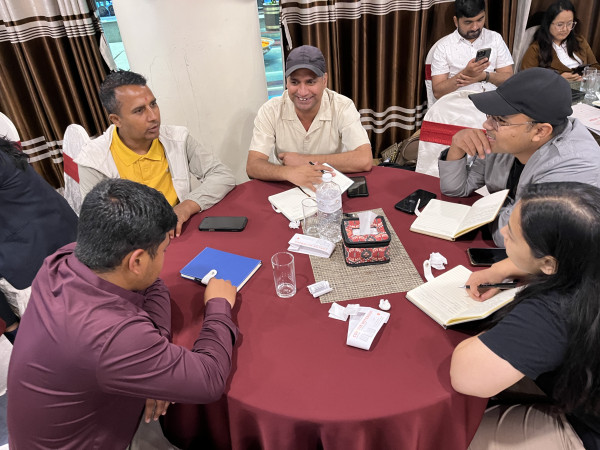
During the
group reflection and discussion session facilitated with support from
UN-Habitat Nepal, participants highlighted the need to integrate NbS/EbA
approaches from the early stages of planning and design. Discussions emphasized
strengthening technical guidelines, improving procurement approaches,
conducting better site assessments, and promoting solutions that combine
conventional infrastructure with ecological approaches.
Participants
also highlighted the importance of capacity building, knowledge sharing, and
greater collaboration among government agencies, consultants, contractors, and
technical experts to support effective implementation and scaling up of Urban
EbA interventions.
The event
reinforced that contractors, engineers, architects and consultants are critical
partners in translating Urban EbA concepts into practice. Strengthening their
technical capacity and engagement will be essential to advance nature-positive,
resilient, and sustainable urban development in Kathmandu Valley.