National Planners Congress addresses the issues of Sustainable and Inclusive Local Development in Nepal
21 June 2024, Lalitpur.
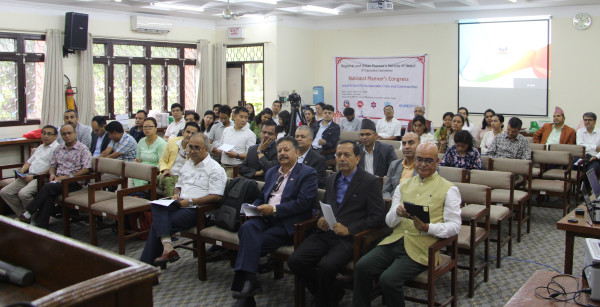
Regional and Urban Planners Society of Nepal (RUPSON), in collaboration with Ministry of Urban Development (MoUD), European Union (EU), USAID, UNOPS, UN-Habitat and Cities Alliance successfully organized National Planners Congress with the theme "Local Action for Sustainable Cities & Communities" on 21 June 2024 at Nepal Administrative Staff College, Jawalakhel. The event witnessed the participation of 80 esteemed Planners, Architects, Social Development Experts, Young Professionals, Academia, Government officials, and development partners, focusing on new town development, localization of urban planningand promoting inclusive cities and resilient communities.
The Congress, as part of "Cities 4 Women" project being implemented jointly by UNOPS, UN-Habitat and Cities Alliance in six municipalities in Nepal emphasized promotion of inclusive open space with engagement of intersectional communities for climate-resilient urban development. The event was graced by the presence of Prof. Dr. Sangeeta Singh, Hon’ble member of National Planning Commission (NPC). As a keynote speaker, she highlighted the significance of decentralized management and the national strategy to achieve Sustainable Development Goals (SDGs) by 2030. Singh called for alignment of development programs with the government's 16th periodic plan and urged stakeholders to focus on achieving the SDGs.
The Congress commenced with welcoming remarks from Arjun Koirala, Vice-Chairperson of RUPSON who emphasized using smart tools and technologies for sustainable cities. Komal Karki, Country Manager of UNOPS, and Maniram Gelal, Secretary of MoUD, stressed the need for infrastructure development and integration of local and indigenous knowledge in urban planning.
During the event, RUPSON felicitated senior urban planner Madhav Bhakta Mathema for his significant contributions to the urban planning sector in Nepal. Prof. Dr. Singh, felicitating him, recognizing Mathema's dedication and for encouraging the promotion of indigenous urban planning practices.