Lamahi Municipality Hosts Orientation on SDG Localization and Strengthening Own Source Revenue

An orientation on SDG Localization and Strengthening Own Source Revenue was held at Lamahi Municipality on June 21, 2025, as a part of “Accelerating Localization of Integrated Climate Action in Nepal" project which aims to support the local governments integrate climate action and sustainable development goals into their planning and budgeting processes. The project is funded by Joint SDG Fund and is implemented in Nepal by WFP, UNDP, and UN-Habitat.

The event was attended by a diverse set of participants, including the mayor, deputy mayor, chief administrative officer (CAO), elected representatives, municipal officials, representatives from province administration, and development partners. CAO, Mr. Prakash Devkota, opened the session by thanking UN-Habitat for facilitating the workshop at a critical time for the municipality as it prepares its annual plan, programs and policies for the budget of the upcoming fiscal year.

UN-Habitat introduced the concept of the joint programme (including concept of SDG Localization) and the purpose of the event. Then, Deputy Mayor, Ms Laxmi Yogi, welcomed the participants and emphasized the role of SDGs and climate actions in municipal development. She further highlighted the importance of strengthening municipal own source revenue to conduct various planned activities in the municipality. Ms. Gayatri Thapa, project focal person and Officer at the Environmental and Disaster Risk Reduction Section of Lamahi Municipality, presented about the current situation of the municipality and highlighted its efforts towards climate action and disaster preparedness.

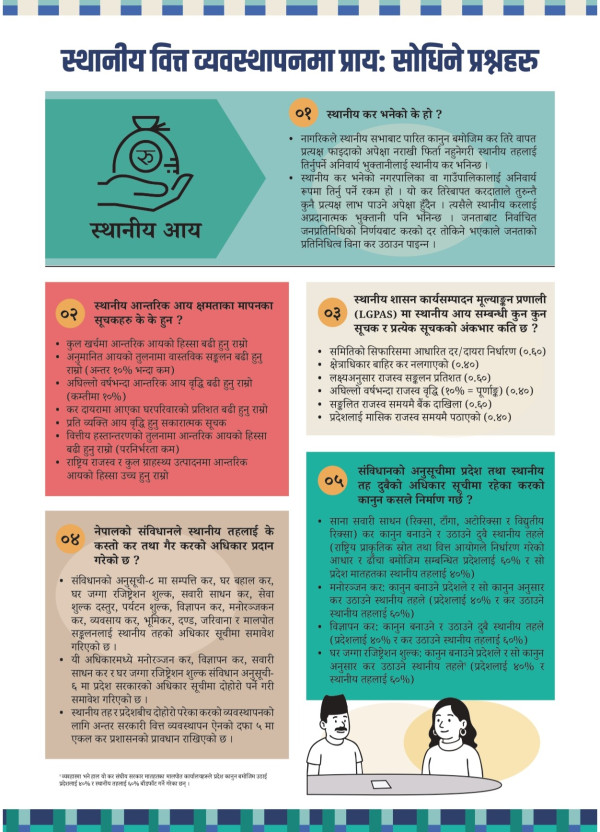
A technical session was then led by Dr. Gopi Krishna Khanal, former secretary of the government of Nepal and municipal finance expert with UN-Habitat. Dr. Khanal delivered a comprehensive presentation on municipal financing and integrating it into the planning process, focusing on strategies to strengthen own-source revenue. He also emphasized practical approaches such as improving tax administration, optimizing fee structures, and leveraging municipal assets, all while ensuring transparency and equity. Following Dr. Khanal’s presentation, Urban Planner from UN-Habitat Nepal, Prabal Dahal, introduced the Voluntary Local Review (VLR) process as an effective tool for SDG localization that enables municipalities to monitor progress, identify challenges, and set development priorities aligned with national and global goals. His presentation summarized the VLR template endorsed by the ministry of urban development, prepared on the basis of VLR preparation experience in Chandragiri municipality. Then, Bandana Sinha, District Coordinator for UN-Habitat, informed the participants about the performance of Lamahi municipality in Local Institutional Self-Assessment (LISA) and facilitated a session on mainstreaming Gender Equality, Disability, and Social Inclusion (GEDSI) into municipal policies, planning, and budgeting frameworks.

Participants were then divided into groups to discuss the municipality’s revenue sources, identified challenges in revenue collection, and proposed actionable solutions. Dr. Khanal facilitated the session where participants actively engaged, contributing valuable insights to inform future reforms. Towards the end of the group work, Dr. Khanal thanked the participants for their engagement and shared that an assessment report will be prepared to help Lamahi Municipality identify its revenue potential. Additionally, a guiding document incorporating lessons from Lamahi’s experience and concepts from UN-Habitat’s ROSRA toolkit is being developed to support all local governments across Nepal in strengthening own-source revenue systems.
Mayor of Lamahi Municipality, Mr. Jograj Chaudhary, delivered the closing remarks- highlighting the significance for the event on municipality’s financial health and sustainable development. He also expressed strong interest in continuing collaboration with UN-Habitat on future projects.
This orientation workshop represents a significant step towards empowering Lamahi Municipality to build resilient, and climate-responsive local governance, setting a replicable model for other municipalities in Nepal.