Consultation Meeting to Finalize ToC of National Gender and Climate Responsive Urban Development Framework and Step-by-Step Municipal Urban Planning Guideline

Oh no the image is broken

30th August 2024


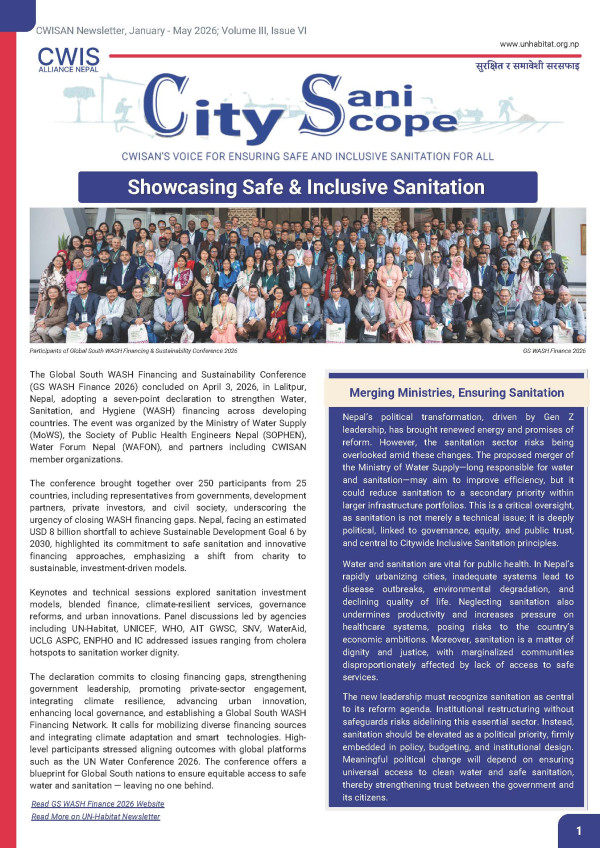
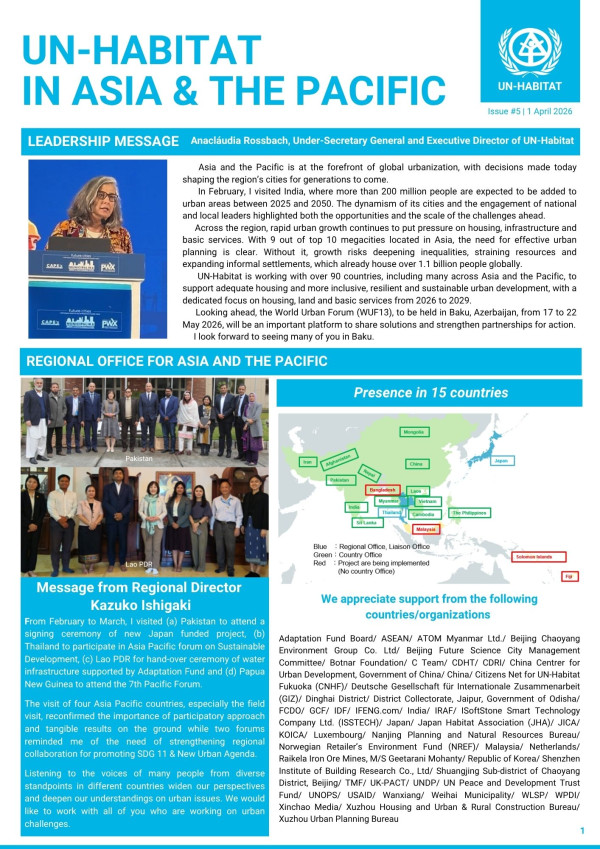
The Ministry of Urban Development (MoUD), in collaboration with UN-Habitat Nepal, UNOPS, and Cities Alliance—partners in the "Cities 4 Women" project supported by the EU and USAID—organized a half-day working session to finalize the Table of Contents (ToC) for MoUD’s National Gender and Climate Responsive Urban Development Framework and the Step-by-Step Municipal Urban Planning Guideline. This session was a critical component for the "Cities 4 Women: Inclusive and Climate Resilient Urbanization in Nepal" project.


 

Preceding the discussions, a team of experts reviewed and presented the national policies and guidelines relevant to urban sector on Consultation meeting for finalization of TOC of National Gender and Climate Responsive Development Framework and Step-by-Step Municipal Planning Guideline that provided a base to prepare the ToCs for the Framework and Guideline. The organized discussions with the users groups on August 30  contributed to the finalization, as they provided critical inputs to improve and adapt the sequence and components to meet the requirements and issues.


Led by Ministry of Urban Development (MOUD), the event brought together key stakeholders, including representatives from government agencies, international partners, and local municipalities like, Ministry of Women, Children & Senior Citizen (MOWCSC), Department of Urban Development & Building Construction (DUDBC), Kathmandu Valley Development Authority (MOUD/KVDA), Town Development Fund (MOUD/TDF), Chandragiri Municipality, Madhyapur Thimi Municipality, Lalitpur Metropolitan City, Godavari Municipality, Kageshwori Manohara Municipality, National Association for Rural Municipalities in Nepal (NARMIN), Regional Urban Planners Society of Nepal (RUPSON), Institution of Engineering (IoE), Urban Studies Program Kathmandu University (KU), UN-HABITAT, UNOPS, Cities Alliance and Experts/Consultants.


Ms. Pragya Pradhan, Habitat Programme Manager, set the agenda for the brainstorming session for both documents, with the aim to prepare implementable and practical guidelines. Experts, Mr. Kumar Dhamala and Mr. Om Dharananda Rajopadhyaya, along with UN-Habitat representatives, presented the TOC and the progress through brief presentations. The Step-by-Step Municipal Urban Planning Guideline had taken a clear shape, featuring 3 phases, 8 steps, and 25 key activities aimed at integrating gender-responsive and climate-resilient urban planning in the 7-step municipal planning process and particularly through public participation. Meanwhile, the National Gender and Climate Responsive Urban Development Framework focused on specific sectors of MOUD that outlined the project framework, regulatory framework, and institutional framework.


A group working session was conducted, where participants at different tables collaborated to review and restructure the framework and guideline where necessary. The findings were then disseminated to the stakeholders through presentation.


Dr. Sanjay Uprety, Associate Professor and Head of the Architecture Department at IOE, leading the National Gender and Climate Responsive Urban Development Framework group, emphasized on integrating sectoral spatial planning for gender-responsive (GR) and climate-resilient (CR) planning. He stressed the need for practical indicators, achievable targets, policy alignment, stakeholder engagement, and capacity building for effective implementation.


Ms. Bhadra Aryal, Senior Section Officer at Chandragiri Municipality, presented inputs on the broadly agreed eight proposed steps in the Step-by-Step Municipal Urban Planning Guideline, that included assigning a focal person/committee, conducting self-municipal assessments by the community, forming inclusive teams, and establishing a Project bank for local urban development agendas. She also emphasized the need for inclusive community participation in selecting critical areas, co-designing with community input, and ensuring climate-resilient and gender-responsive designs. She also highlighted the importance of social audits, accountability, and effective public dissemination of information.


Summarizing the discussions, Mr. Dipendranath Sharma, Project Management Advisor at UNOPS, noted the progress in structuring the national framework and municipal guideline. He praised participant feedback for enhancing clarity and focus, stressing the need for a streamlined and practical TOC to support climate-resilient and gender-responsive urban planning.


Mr. Yekraj Adhikari, Joint Secretary at MoUD (New Town Development Project), highlighted the integration of spatial planning, prioritizing land development, and identifying critical development nodes.  He emphasized the importance of having a master plan for inter-departmental coordination and the internalization of CR and GR principles into planning.


Concluding the meeting, Mr. Padma Kumar Mainalee, Joint Secretary at MoUD (Division Chief of Urban Development Division), underscored the importance of documenting and disseminating information about past, present, and future projects, practices, and reflections to evaluate the effectiveness of policies and guidelines. He emphasized the role of academia to integrate practical urban planning dimensions in the planning curriculum. He also emphasized the need to make framework and guideline documents simple and achievable for both the national and local governments, with a focus on user-friendliness and practical checklists for prioritization. Thus, the workshop concluded with a commitment to developing a clear, user-friendly framework with practical guidelines, clear priorities and checklists for implementation.